

Learning Theory
- Course
- LDTC 600 · 8-unit course · Summer 2026
Unit 01
Unit 1 · Introduction & Portfolio Foundations
Assignment · Portfolio Site Review & Reflection · 110 pts
Discussion 2 · Creating Your Portfolio
I dual-licensed this portfolio: the writing under Creative Commons Attribution 4.0, the code under MIT. Both permit broad reuse with attribution, which is the one thing I do care about, and both match the open knowledge values at the center of Learning Design and Technology.
The license decision
CC BY 4.0
✓ Chosen
Reuse freely, including commercially, as long as you attribute me. The academic standard for open scholarship (PLOS, OpenStax, MIT OpenCourseWare).
CC BY-NC
Too restrictive
Blocks commercial reuse. But the most useful learning artifacts I have used live in paid workplace training, professional development, and books.
CC BY-SA
Workable, but viral
Forces every derivative to share alike, which complicates mixing my work with materials under other licenses.
Two artifacts, two licenses
The writing
CC BY 4.0
Frameworks, analyses, and lesson content. Quote, remix, and build on it with attribution.
The code
MIT
The software that renders the site (app/, tools/). Reuse with attribution.
Full rationale
I licensed this portfolio under Creative Commons Attribution 4.0 because the work is intended to be a learning artifact. It should be useful to other students, instructors, and collaborators who can quote, remix, and build on it as long as they attribute me. CC BY 4.0 is the academic standard for openly licensed scholarship, used by PLOS, OpenStax, MIT OpenCourseWare, Wikipedia text, and the broader open knowledge movement. As a field, we want learning artifacts to circulate, get adapted to new contexts, and serve students who could not otherwise access the material; restrictive licensing works against that mission.
I considered the NonCommercial (CC BY-NC) and ShareAlike (CC BY-SA) variants. NC felt overprotective. The most useful learning artifacts I have personally encountered have been freely reusable in commercial contexts such as workplace training, professional development, and books. SA would have been workable, but the viral license requirement complicates downstream reuse for instructors who want to mix my work with their existing materials under different licenses. CC BY is the most permissive choice that still preserves attribution.
The site's code is separately licensed under MIT. The dual-license is intentional: written work, frameworks, and analyses are CC BY 4.0; the software that renders them is MIT. Both permit broad reuse with attribution; both reflect the same open knowledge stance applied to different kinds of artifact.
Unit 02
Unit 2 · Behaviorism & Gagne's Nine Events
Assignment · Applying Behaviorism and Gagne's Nine Events Lesson Plan Outline · 110 pts
Discussion · Behaviorism
01 · Overview
Behaviorism treats the observable, measurable relationship between a stimulus and a response as the unit of study. Internal mental states are bracketed. What matters is what can be seen, counted, and reinforced. The lineage runs about a century.
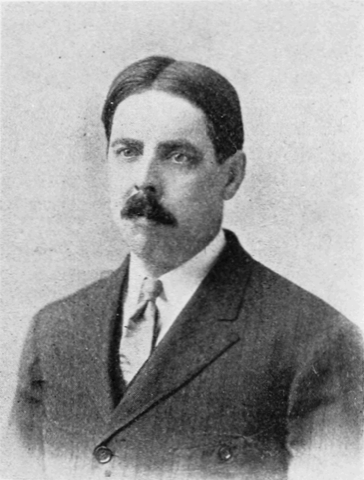
1898
Thorndike
Law of Effect: satisfying consequences make a behavior repeat.
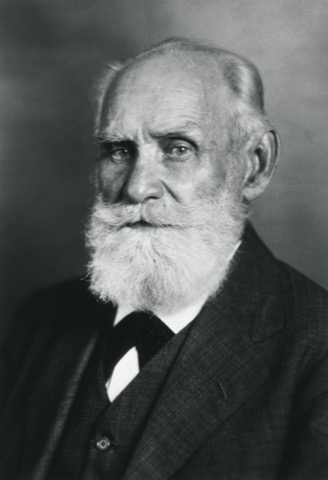
1901
Pavlov
Classical conditioning: a neutral cue comes to trigger a response.
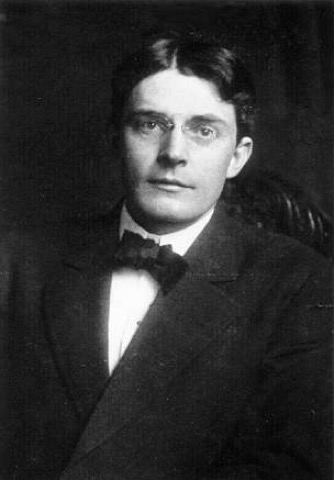
1913
Watson
Names the field; study only what can be observed.
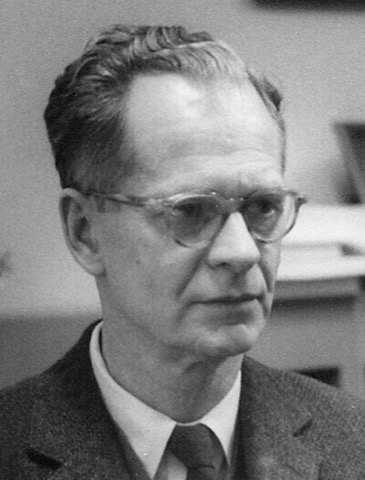
1938
Skinner
Operant conditioning; consequences shape voluntary behavior.

1961
Bandura
Social learning; the bridge toward cognitivism.
Portraits, grayscale-treated: Pavlov (U.S. National Library of Medicine, public domain); Watson and Thorndike (public domain); Skinner (Wikimedia Commons, CC BY 3.0); Bandura (Wikimedia Commons, CC BY-SA 4.0).
If behavior is shaped by consequences, then instruction is the deliberate engineering of those consequences.
02 · Implications for instructional design
Observable, measurable objectives
Targets written in performance terms: what the learner does, under what conditions, to what standard. Mager (1962) codified this.
Stimulus, response, reinforcement
Lessons sequence around contingencies. Correct responses get reinforced; incorrect ones get immediate correction.
Shaping by approximation
Complex skills broken into smaller behaviors, reinforced step by step. The demonstrate, guide, release progression descends from this.
Immediate, contingent feedback
Reinforcement decays with delay. Designs that close the loop in seconds beat ones that close it in days.
Mastery before progression
Bloom (1968) built Learning for Mastery on this. No advancing until the current skill is held.
03 · Strengths and limits in my context
My context is Digital Foundations, the first module of my Getting Ready to Work with AI pathway. It teaches working adults the device, account, and data basics that have to be in place before any AI training can stick. A lot of that groundwork is behavior: set up a password manager, turn on two-factor authentication, lock a screen, back up files. The reinforcement is often built into the tools, so the payoff is immediate and the habit is shaped step by step.
Strengths
- Builds the skills layer of digital competence, where clear steps and fast feedback fit.
- Makes security habits automatic, so they hold up under time pressure and low confidence.
- Tools deliver feedback with almost no delay, the strongest kind of reinforcement.
- Maps onto a demonstrate, guide, practice progression on the learner's own device.
Limits
- Builds the behavior, not the understanding behind it. Reuse can fail the moment a threat looks new.
- Weak for judgment under uncertainty, like deciding if an unfamiliar email or app is safe.
- Treats the learner as a responder, not a sense-maker building a model of risk.
- The strongest reinforcers live in the tools, so a broken setup can break the feedback loop.
The honest summary: behaviorism builds the skill layer of Digital Foundations cleanly, but not the judgment layer. I use it for the hands-on setup and bring in richer theories for the reasoning about risk that comes later in the pathway.
References
- Bloom, B. S. (1968). Learning for mastery. Evaluation Comment, 1(2).
- Ertmer, P. A., & Newby, T. J. (1993). Behaviorism, cognitivism, constructivism. Performance Improvement Quarterly, 6(4).
- Ferster, C. B., & Skinner, B. F. (1957). Schedules of reinforcement. Appleton-Century-Crofts.
- Mager, R. F. (1962). Preparing instructional objectives. Fearon.
- Skinner, B. F. (1953). Science and human behavior. Macmillan.
- Skinner, B. F. (1968). The technology of teaching. Appleton-Century-Crofts.
- Thorndike, E. L. (1898). Animal intelligence. Psychological Review Monograph Supplements, 2(4).
- Watson, J. B. (1913). Psychology as the behaviorist views it. Psychological Review, 20(2).
Lesson plan outline · Behaviorism + Gagne's Nine Events
Subject
Setting up and using a password manager. The first hands-on lesson in Digital Foundations. The skill is procedural and easy to observe, which makes it a clean fit for behaviorism: the goal is a behavior I can prompt, reinforce, and check. My background is in cybersecurity, so I know the content and where people get stuck.
The objective · Mager ABCD
- Audience
- A working adult new to password managers.
- Behavior
- Install a manager, generate one strong unique password, save a real login, and sign in with autofill.
- Condition
- On their own device, following a guided walkthrough.
- Degree
- Three real logins saved, one new password created, and one successful autofill sign-in.
Gain attention · live
The lesson opens with this. The learner types a password and watches the crack-time react. Try it.
Type to see how long it would take to crack.
Rough estimate (offline guessing at ten billion tries a second). Your input stays in your browser and is never sent anywhere. This is the lesson's attention hook running live: you act, it responds, the meter reinforces.
Scenario · the four quadrants of operant conditioning
The behavior I want: when a learner hits a login or sign-up screen, they reach for the manager to generate and save a strong unique password instead of reusing one. The stimulus is the login screen and the generate-password button. I use all four operant quadrants to build it and keep it (Stangor & Walinga, 2014; Chin, 2011).
Add a stimulus
Remove a stimulus
Strengthens the habit
Positive reinforcement
Save or generate a password and the strength meter turns green, a saved message appears, and autofill signs them in fast next time.
Negative reinforcement
The weak-or-reused warning disappears once it is fixed, and the stress of remembering passwords is gone.
Weakens the habit
Positive punishment
A reused or weak password gets a red flag that it showed up in known breaches, discouraging the old habit.
Negative punishment
Autofill will not work for accounts never saved, so skipping the manager costs the convenience they now like.
Because it is a chain, I shape it in order: save one password, then generate a new one, then use autofill, reinforcing each step before the next. As the tool gets used day to day, the reinforcement moves from constant to occasional, which is what makes the habit stick.
Gagne's Nine Events of Instruction
1
Gain attention
A live 'how long to crack your password?' tool. The estimate jumps from instant to centuries. A real reason to care.
2
Inform objectives
By the end: install a manager, create and save one strong password, sign in with autofill (Mager, 1962).
3
Stimulate recall
Ask where their passwords live now. Naming the old habit surfaces the behavior the new one replaces.
4
Present content
A captioned video plus transcript. Plain words first: a password manager is a locked notebook your apps can read.
5
Provide guidance
A walkthrough on the learner's own device. Branch by skill, not learning styles (Pashler et al., 2008). Captions and transcript (CAST, 2018).
6
Elicit performance
Install the tool, save three real logins, create one new strong password, all on their own device.
7
Provide feedback
Mostly built into the tool: strength meter, saved message, working autofill. An end-of-lesson check catches misses.
8
Assess performance
A task, not a quiz: a vault screenshot with three logins and one created password, plus one autofill sign-in (Bloom, 1968).
9
Retention and transfer
The logins feed the one-page device map reused later. Then do the same on work and bank accounts this week.
Reflection
Behaviorism fits because the target is a clear, observable behavior with a fast feedback loop. I pick one behavior, find the cue, and set up immediate consequences across the four quadrants so the good habit grows and the old one fades (Skinner, 1953; Stangor & Walinga, 2014). Small reinforced steps, then a shift from constant to occasional reinforcement, make it last. Gagne's nine events give that core an order and add the feedback and transfer steps behaviorism leaves out (DeBell, 2019; Gagne et al., 2005). Where it stops is the understanding behind the behavior. A learner can finish every step without knowing why reuse is risky, so I pair the action with a short reason and a real-account transfer task, and save the deeper reasoning for the cognitivist work later in the pathway.
References
- Bloom, B. S. (1968). Learning for mastery. Evaluation Comment, 1(2).
- CAST. (2018). Universal Design for Learning guidelines (version 2.2). https://udlguidelines.cast.org
- Chin, L. (2011). The four quadrants of operant conditioning [Infographic]. Flickr. CC BY-NC-ND 2.0.
- DeBell, A. (2019, December 16). How to use Gagne's nine events of instruction. Water Bear Learning.
- Gagne, R. M., Wager, W. W., Golas, K. C., & Keller, J. M. (2005). Principles of instructional design (5th ed.). Wadsworth/Thomson Learning.
- Mager, R. F. (1962). Preparing instructional objectives. Fearon.
- Pashler, H., McDaniel, M., Rohrer, D., & Bjork, R. (2008). Learning styles: Concepts and evidence. Psychological Science in the Public Interest, 9(3).
- Skinner, B. F. (1953). Science and human behavior. Macmillan.
- Stangor, C., & Walinga, J. (2014). Introduction to psychology (1st Canadian ed.). BCcampus.
Unit 03
Unit 3 · Cognitivism
Discussion + quiz only
Discussion · Cognitivism
01 · Overview
Cognitivism rose in the late 1950s as psychologists rejected behaviorism's refusal to look inside the black box. They argued that internal mental processes are real and can be studied: attention, memory, schema building, and problem solving (Bates, 2022; Kimmons, 2022). The through-line for teaching is that learning is the active construction and reorganization of knowledge in memory. So instruction has to respect how attention and working memory actually work (McLeod, 2024).
1956
George Miller
Working memory is small. Roughly seven chunks at once is the famous limit.
1968
Atkinson & Shiffrin
The multi-store model: sensory, working, and long-term memory as a pipeline.
1970s
Jean Piaget
Stages of cognitive development; learners build and reorganize schema.
1988
John Sweller
Cognitive Load Theory: split load into intrinsic, extraneous, and germane.
2001
Richard Mayer
Cognitive theory of multimedia learning; principles that manage load.
A timeline of the people, not their portraits. Public-domain photos of these researchers are not reliably available, so the page names them instead of decorating with images.
If learning is the work of a limited working memory, then instruction is the management of that load.
02 · Implications for instructional design
Cognitivism puts cognitive load at the center. The job is to keep intrinsic load manageable, cut extraneous load, and support the germane load that builds schema (Sweller, 1988; McGraw-Hill Canada, 2019). That points at a handful of concrete moves.
Chunk and segment
Break content into learner-paced pieces so working memory is never asked to hold the whole thing at once.
Activate prior knowledge
Connect the new idea to what the learner already has, so it lands in an existing schema instead of floating free.
Worked examples
Show a full solved case before asking for independent practice. It lowers load while the schema is still forming.
Signaling
Cue what matters with headings, highlights, and named UI elements so attention goes to the right place.
Modality and coherence
Let words and pictures share the load instead of competing, and strip out anything extraneous (Mayer, 2001).
The goal shifts from producing a behavior to building durable understanding that transfers to a new situation.
Try it · feel the limit · round 1 of 3
Remember a 5-digit sequence.
Round scores: —
Working memory holds roughly seven chunks, plus or minus two (Miller, 1956). The 9-digit round is where most people feel the ceiling. This is the limit every chunking, signaling, and worked-example move in cognitivism is built to manage.
03 · Strengths and limits in my context
My context is Digital Foundations, the device, account, and data module that working adults need before any AI training. Cognitivism explains why these beginners stall. A security task stacks new jargon on shaky prior knowledge, and working memory overloads. It also gives me the levers and targets the understanding that behaviorism misses.
Strengths
- Explains the overload I see in beginners and tells me to chunk the password-manager setup.
- Names concepts in plain language first, so a schema forms before the jargon arrives.
- Builds a mental model of risk that transfers to threats the learner has not seen before.
- Signaling points attention at what matters on a busy screen.
Limits
- Internal processes are harder to observe and measure than behaviors, so assessment is trickier.
- It says little about motivation or the social and affective side of learning.
- Working-memory capacity varies across my learners, so manage the load is a moving target.
- It needs behaviorism for the hands-on habit and richer theories for the social layer.
04 · Cognitive-load analysis of a real instructional material
The material
Bitwarden · Getting started with the web app
bitwarden.com/help/getting-started-webvaultA roughly 2,000-word how-to that walks a new user through setting up a password vault: creating folders, adding logins, generating passwords, importing data, and turning on two-step login. It alternates concise numbered steps with captioned screenshots and tip callouts under headings like First steps and Secure your vault.
What it does well · segmenting + signaling
Each task (folders, then logins, then generation, then two-factor) is a discrete chunk, so working memory is never asked to hold the whole process at once. That is exactly what Cognitive Load Theory recommends for novices (Sweller, 1988). The tip boxes and named icons signal what matters, which lowers extraneous load.
Where it slips · redundancy + coherence
A few navigation paths are described in wordier prose than the screenshot beside them needs. The text and the image compete to carry the same where to click information, which adds load instead of sharing it (Mayer, 2001).
How I would fix it: trim those steps to a single cue and let the screenshot carry the spatial where to click information. That applies the modality and redundancy principles so the image and the words share the load instead of competing for it (Mayer, 2001).
References
- Atkinson, R. C., & Shiffrin, R. M. (1968). Human memory: A proposed system and its control processes. In K. W. Spence & J. T. Spence (Eds.), The psychology of learning and motivation (Vol. 2). Academic Press.
- Bates, T. (2022). Teaching in a digital age (3rd ed.). Tony Bates Associates Ltd.
- Bitwarden. (n.d.). Getting started with the web app. https://bitwarden.com/help/getting-started-webvault/
- Kimmons, R. (2022). Educational research across multiple paradigms. EdTech Books.
- Mayer, R. E. (2001). Multimedia learning. Cambridge University Press.
- McGraw-Hill Canada. (2019, April 16). Richard Mayer's cognitive theory of multimedia learning.
- McLeod, S. (2024, January 24). Piaget's theory and stages of cognitive development. Simply Psychology.
- Miller, G. A. (1956). The magical number seven, plus or minus two. Psychological Review, 63(2).
- Sweller, J. (1988). Cognitive load during problem solving: Effects on learning. Cognitive Science, 12(2).
Unit 04
Unit 4 · Constructivism
Assignment · Constructivism Learning Scenario · 110 pts
Discussion · Constructivism
01 · Overview
Constructivism treats learning as the active construction of meaning from experience. The learner is not a container the teacher fills, but a builder who uses prior knowledge to make sense of new input (Bates, 2022; Piaget, 1973). The movement has two close cousins. Cognitive constructivism, rooted in Piaget, focuses on what happens inside the head as schema get built and reorganized. Social constructivism, rooted in Vygotsky, says the building happens between people first and inside the head second (Vygotsky, 1978; Nickerson, 2024).
1936
Jean Piaget
Cognitive constructivism. Learners build and reorganize schema in stages, through assimilation and accommodation.
1934
Lev Vygotsky
Social constructivism. Learning happens in the Zone of Proximal Development with a more knowledgeable other.
1960
Jerome Bruner
Spiral curriculum. Move from action to image to symbol, then revisit each idea at greater depth.
1976
Wood, Bruner, Ross
Names scaffolding. The temporary support a tutor gives, then removes as the learner takes over.
1987
John Keller
ARCS model of motivation. Attention, relevance, confidence, satisfaction. Engagement is part of the design, not a hope.
A timeline of the people, not their portraits. Public-domain photos of these researchers are not reliably available, so the page names them instead of decorating with images.
What a child can do with help today, she can do alone tomorrow.
02 · Implications for instructional design
Constructivism shifts the design job from delivering content to engineering experiences. The learner has to do the work that builds the knowledge, and the design has to set up the conditions for that work to happen (Egbert & Roe, 2021).
Active knowledge construction
Replace passive reading with tasks the learner actually performs. The artifact they produce is the evidence the schema is forming.
Scaffold, then fade
Provide worked examples, prompts, and templates while the skill is new. Pull them away as the learner takes over (Wood et al., 1976).
Target the ZPD
Aim each task above independent ability but inside reach with help. Too easy and nothing is built; too hard and the learner stalls.
Social and dialogic learning
Pair learners, run reciprocal teaching, hold structured discussion. Knowledge is constructed between people first (Vygotsky, 1978; Gonzalez, 2014).
Anchored and situated learning
Set tasks in the real context the learner will use them in. Decontextualized practice does not transfer (Kurt, 2021).
Motivation by design (ARCS)
Plan for attention, relevance, confidence, and satisfaction. Engagement is a design variable, not a personality trait (Keller, 1987; Pappas, 2015).
The shift is from telling to setting up. The teacher becomes a coach who tunes the support up or down depending on what the learner can already do.
03 · Strengths and limits in my context
My context is Digital Foundations, the device, account, and data module for working adults who need to be ready before any AI training. Constructivism fits well because security skills are built by use. A learner who installs a password manager on her own laptop, saves three real logins, and signs in with autofill builds a working schema that a video alone cannot give her. The ZPD frame also tells me where to set the bar: just above the current habit, with a guide nearby.
Strengths
- Tasks happen on the learner's real device with her real accounts, so the schema is built where it will be used.
- Scaffolding fits the wide range of starting points adult learners bring without locking everyone to the same path.
- Social learning lets a confident peer or coach handle the in-the-moment questions that a static lesson cannot.
- The ZPD gives me a clear test for task difficulty: not too easy, not too hard, doable with help.
Limits
- Pure discovery is slow and risky for security work, where a wrong setup can leak data. I keep tight guardrails on the core procedural steps.
- Social construction needs other learners or a guide. An asynchronous solo learner gets less of this and needs other supports.
- Assessment is harder than for behaviorism. Authentic tasks take longer to grade and need a clear rubric to stay fair.
- It needs behaviorism for the habit layer and cognitivism for the cognitive load work. Constructivism is the frame, not the whole toolkit.
The honest summary: constructivism is the right frame for the judgment and confidence work in Digital Foundations, sitting on top of the behaviorist habit layer and the cognitivist load management. It tells me to build experiences, not just lessons.
References
- Bates, T. (2022). Teaching in a digital age (3rd ed.). Tony Bates Associates Ltd.
- Bruner, J. S. (1960). The process of education. Harvard University Press.
- Bruner, J. S. (1966). Toward a theory of instruction. Harvard University Press.
- Egbert, J., & Roe, M. F. (2021). Theoretical models for teaching and research. Washington State University Press.
- Gonzalez, J. (2014). The reciprocal learning strategy [Video]. Cult of Pedagogy.
- Keller, J. M. (1987). Development and use of the ARCS model of instructional design. Journal of Instructional Development, 10(3), 2–10.
- Kurt, S. (2021, May 17). Anchored instruction. Educational Technology.
- Nickerson, C. (2024, January 24). Social constructivism. Simply Psychology.
- Pappas, C. (2015, July 6). Keller's ARCS model of motivation. eLearning Industry.
- Piaget, J. (1973). To understand is to invent: The future of education. Grossman.
- Vygotsky, L. S. (1978). Mind in society: The development of higher psychological processes (M. Cole, V. John-Steiner, S. Scribner, & E. Souberman, Eds.). Harvard University Press.
- Wood, D., Bruner, J. S., & Ross, G. (1976). The role of tutoring in problem solving. Journal of Child Psychology and Psychiatry, 17(2), 89–100.
Unit 05
Unit 5 · Connectivism & Personal Learning Networks
Assignment · PLN Selection and Professional Learning Plan · 110 pts
Content forthcoming. Added as I complete this unit.
Unit 06
Unit 6 · Adult Learning & Andragogy
Discussion + quiz only
Content forthcoming. Added as I complete this unit.
Unit 07
Unit 7 · Learner Motivation & Self-Regulation
Discussion + quiz only
Content forthcoming. Added as I complete this unit.
Unit 08
Unit 8 · Synthesis & Course Reflection
Assignment · Portfolio Check and Course Reflection · 180 pts
Content forthcoming. Added as I complete this unit.